
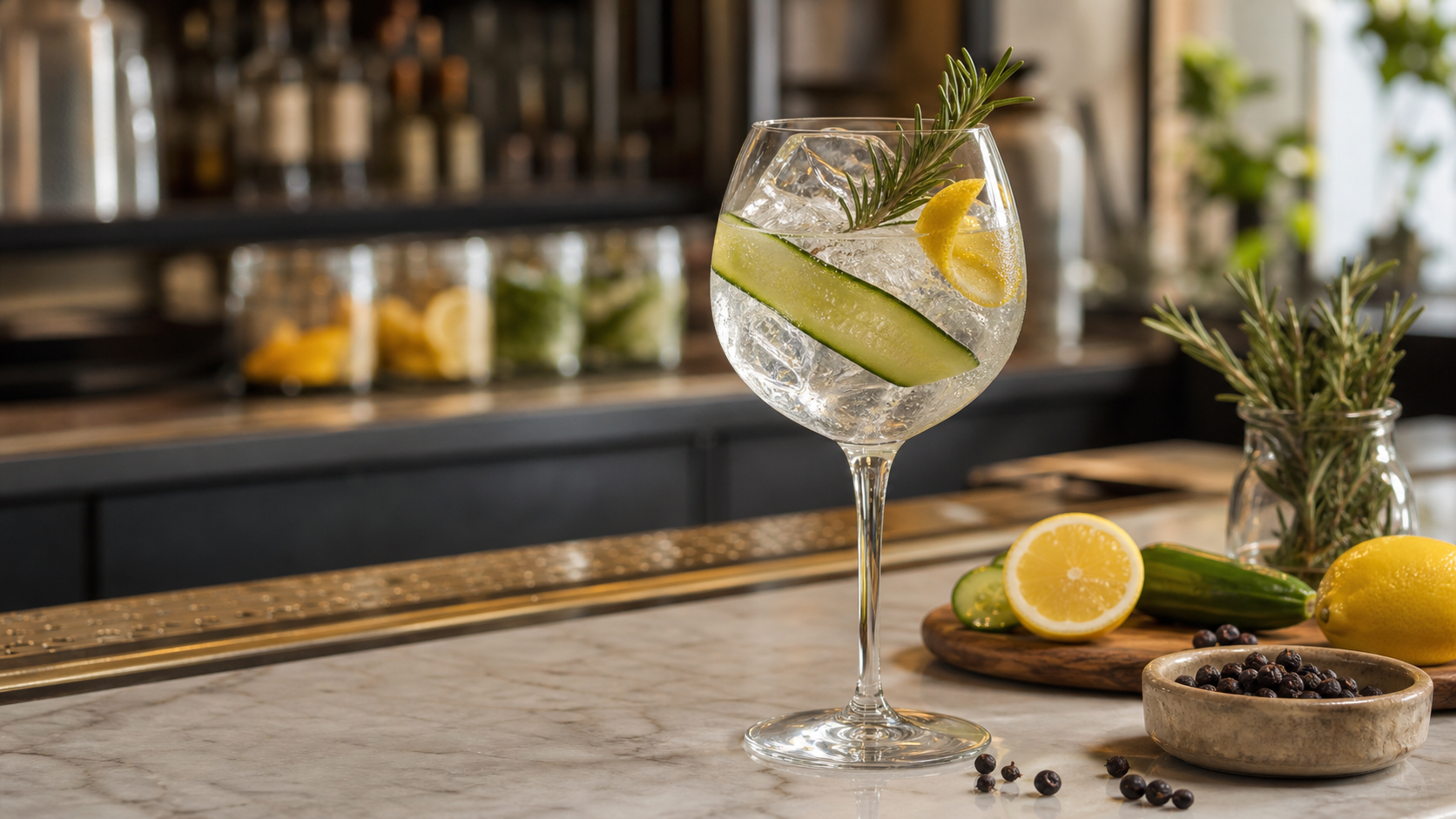
A perfect Gin and Tonic is not just about pouring gin, tonic and a few ice cubes into a glass. It's a balance: the gin's style, the tonic's bitterness, the ice's freshness and the garnish's aroma all need to point in the same direction.
What Is a Perfect Serve?
In the world of gin, a Perfect Serve refers to the recommended way to serve a gin: the best-suited tonic, the ratio, the type of glass, the ice and the garnish. It isn't an official rule or an absolute truth. It's more of a tasting suggestion, often designed by the brand, a bartender or the community, to highlight the gin's aromatic profile.
A floral gin doesn't behave like a very dry London Dry. A very citrusy gin doesn't necessarily need the same tonic as a spiced gin. This is where the Perfect Serve becomes interesting: it helps you understand the gin before you even take the first sip.
Why Gin Lends Itself So Well to the Perfect Serve
Gin is an aromatic spirit. Its signature comes from juniper berries, but also from its botanicals: citrus, spices, flowers, herbs, roots, berries, cucumber or even tea, depending on the recipe. Juniper isn't just one botanical among others: to legally be called gin in the European Union, its flavor must remain predominant. In a Gin and Tonic, these aromas don't stand alone: they meet the tonic, the bubbles, the sugar, the bitterness and the garnish's scent.
A good pairing can lengthen the gin without erasing it. A poor pairing, on the other hand, can make it flat, too sweet, too bitter or muddled.
The Role of the Tonic
Tonic isn't just a "diluter." It often makes up two to three times the volume of gin in the glass. It can therefore completely change how the cocktail is perceived.
The families below are tasting guidelines, not official categories: two "Indian" tonics can have very different levels of bitterness, sweetness and citrus.
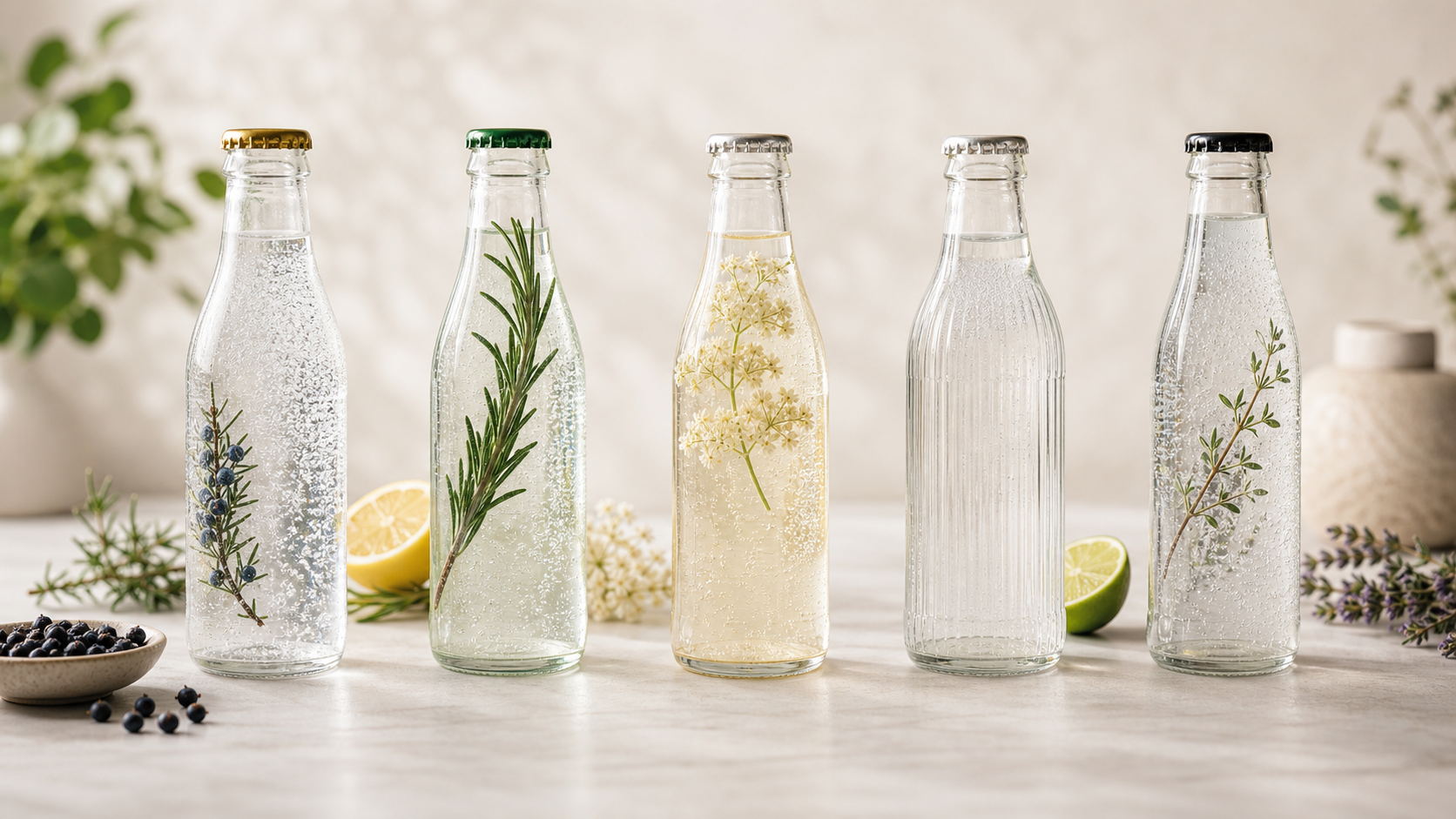
- Indian tonic — crisp bitterness, classic profile. Often compatible with London Dry, dry gins and juniper-forward gins.
- Mediterranean or aromatic tonic — more aromatic, herbaceous, sometimes softer. Often compatible with floral, fresh or herbaceous gins.
- Elderflower tonic — floral accent, slightly sweet. Often compatible with floral, delicate or cucumber/rose gins.
- Less sweet / light tonic — less sweetness, more direct read of the gin. Often compatible with complex or premium gins you want to let speak.
- Dry, understated tonic — discreet support, fine bubbles, balance. Often compatible with spiced or unusual gins and highly aromatic recipes.
Why Several Tonics Can Suit the Same Gin
There isn't always a single perfect tonic. For the same gin, several families can work depending on the effect you're after. A dry tonic can reveal structure. A floral tonic can round out the glass. A Mediterranean tonic can accentuate herbs and citrus. An understated tonic can keep the gin in the spotlight.
That's why a Perfect Serve isn't a straitjacket. It's a starting point. The real work is understanding the aromatic direction: do you want to reinforce the gin, soften it, refresh it, or make it more food-friendly?
The Garnish: Not Just Decoration
The garnish is often misunderstood. It's not just there to make the glass look pretty. It works mainly on the nose. Even before tasting, you smell the lemon, cucumber, rosemary, orange or mint. That scent prepares the palate and guides the tasting.
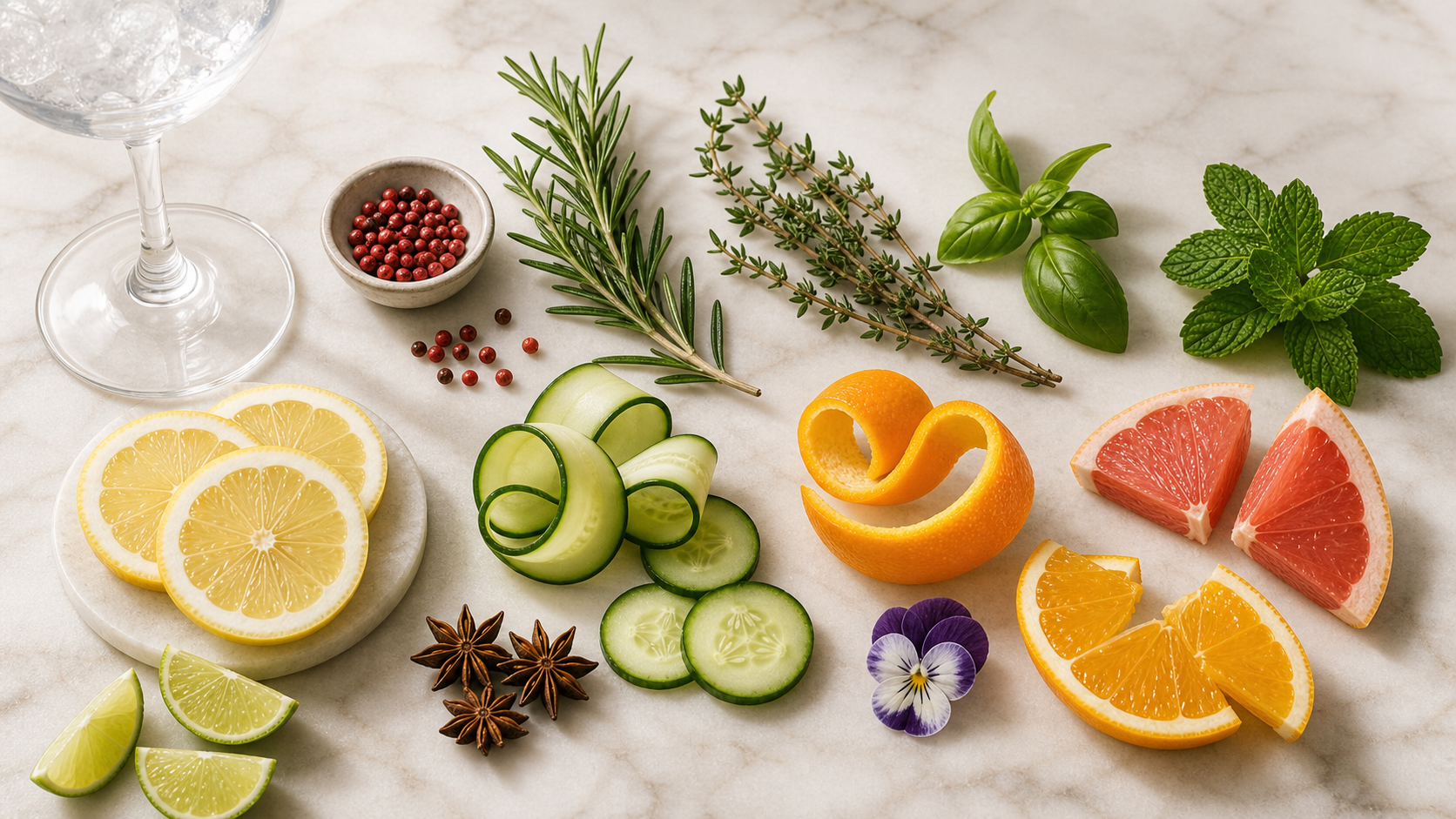
- London Dry, juniper-forward, dry — lemon · lime
- Citrus-led — grapefruit · orange
- Floral — cucumber · orange · edible flower
- Herbaceous — rosemary · basil · thyme
- Spiced — orange · pink peppercorn · star anise
- Fresh, cucumber, rose — cucumber · mint
The most useful rule: don't overload it. One well-chosen garnish is often better than a pile of elements that muddy the glass.
Ratio, Glass and Ice
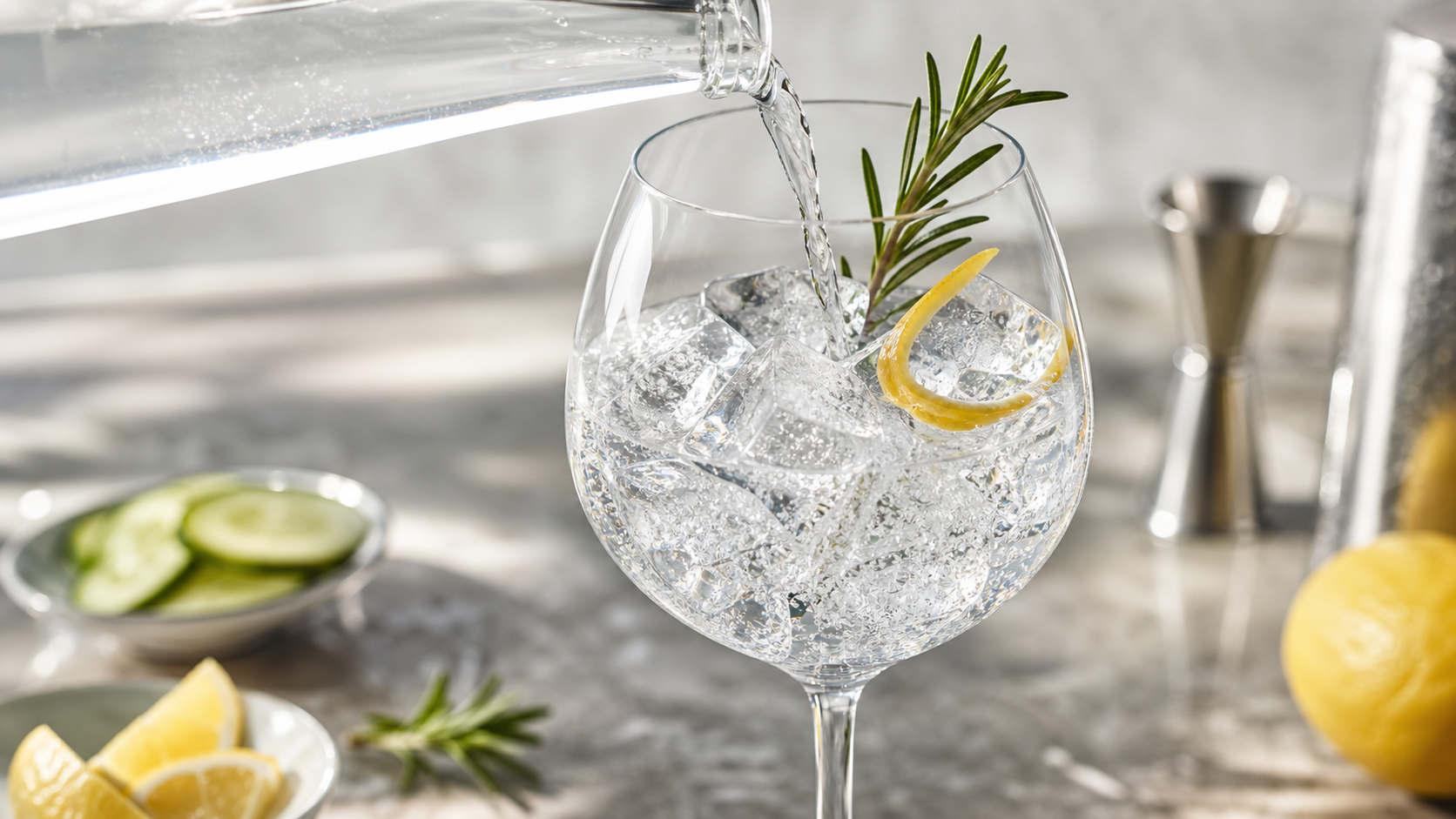
A good starting point is to use 4 cl of gin to 12 cl of tonic, or 5 cl of gin to 15 cl of tonic. That gives an easy-to-remember 1:3 ratio. Some gins can handle a more concentrated serve, while others benefit from being lengthened further.
Ice matters enormously. Large ice cubes melt more slowly, keep the cocktail cold and avoid overly rapid dilution. A balloon glass showcases the aromas, while a highball gives a fresher, more direct read. Either way, pour the tonic gently to preserve the bubbles.
Four GinToLove Perfect Serves to Try
The following examples are GinToLove recommendations. They may draw inspiration from well-known serves, but they don't always claim to reproduce a brand's official Perfect Serve. The goal is to commit to an aromatic reading: choosing a tonic and garnish that reveal the gin in the glass.
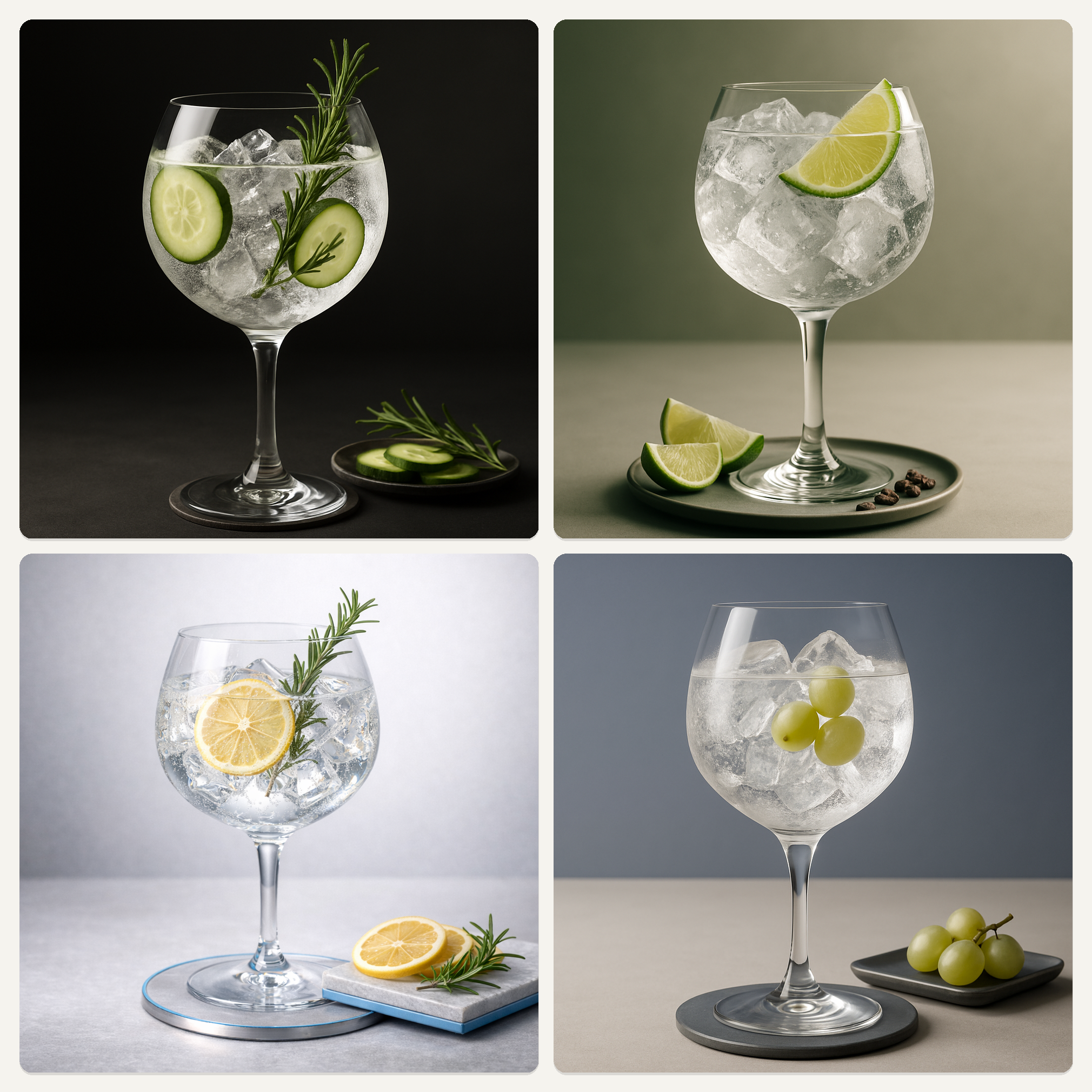
Hendrick's Gin works beautifully with a Mediterranean tonic, ultra-fresh cucumber and a small sprig of fresh rosemary. The pairing highlights its floral elegance, freshness and signature cucumber note. Pre-chill a large glass, pour 5 cl of Hendrick's over large ice cubes, slowly top up with 15 cl of Fever-Tree Mediterranean Tonic Water, then add three thin cucumber slices and a lightly bruised sprig of rosemary.
Tanqueray London Dry Gin calls for a more classic serve: a well-chilled copa glass, large ice cubes, a crisp tonic and fresh lime. The lime underscores the gin's precision without masking its dry profile. An effective option: Thomas Henry Tonic Water with a lime wedge, stirred very gently to keep the fizz.
Bombay Sapphire can shine with a premium Indian tonic, a thin lemon slice and a sprig of fresh rosemary. Large ice cubes limit dilution, while the lemon and rosemary subtly reinforce the gin's citrus and herbal notes. For this direction, you can try Franklin & Sons Premium Indian Tonic Water.
Nordés Gin enjoys a very fresh serve, with white grapes. This garnish echoes the Albariño wine distillate found in the gin and reinforces its Galician character. Serve it well chilled with a balanced tonic like Thomas Henry Tonic Water, then sip slowly to let the floral, fruity and herbaceous notes come through.
Finding the Perfect Serve for a Gin
The simplest approach is to start from the gin's aromatic profile: dry, floral, citrusy, spiced, herbaceous, fresh or fruity. Then choose a tonic that goes in the same direction or brings a controlled contrast. Finally, add a garnish that speaks to the nose without taking over.
On GinToLove, every gin page can become a starting point: discover the gin's profile, compare tonics, then try several Perfect Serves until you find the one that suits you.
The perfect Perfect Serve really does exist: it's the one you enjoy. Pairings, tonics and garnishes are there to guide you, reveal a gin and avoid clumsy combinations, but the best Gin and Tonic is still the one you feel like drinking. At GinToLove, we'd rather offer pointers than rules.
Keep exploring:
Quick FAQ
What ratio should I use for a Gin and Tonic?
The simplest guideline is 1 part gin to 3 parts tonic: for example 4 cl of gin and 12 cl of tonic, or 5 cl of gin and 15 cl of tonic. Adjust from there based on the gin's strength and your taste.
Which tonic should I choose with a floral gin?
A floral, Mediterranean or lightly sweetened tonic often works well, as long as it doesn't cover the gin. The idea is to accompany the floral, cucumber or soft citrus notes without making the glass overly perfumed.
Should I use a lot of ice in a Gin and Tonic?
Yes. Plenty of large ice cubes keep the cocktail cold longer and melt more slowly. The result is often less diluted than with a few small ice cubes.
Which garnish should I choose with a dry or very citrusy gin?
With a dry gin, lemon or lime are usually the safest options. With a very citrusy gin, try grapefruit, orange or lemon, keeping it light so it doesn't overpower the gin's nose.
Please drink responsibly. Alcohol abuse is dangerous for your health.