Wild sloes picked by hand on Vis spend three months steeping in HUM 587's Botanical Gin before a sweetener is added to finish this limited edition. The result comes in a 50 cl bottle at 29% ABV and has a rich, warm red colour that comes straight from the fruit. It took silver at the European satellite of the San Francisco World Spirits Competition in 2025, and the batch described by the distillery was made in May 2022.
The base is the distillery's thirteen-botanical London DryLondon DryA style, not a place of origin: every flavour comes from distilling natural botanicals. After distillation only water and a trace of sugar may be added, with no flavouring or colouring.GlossarySee London Dry gins, made by Gary and Hilde Hellebø Ward at Okusi Visa with herbs gathered on the slopes of Mount Hum. Sloes, the small dark fruit of the blackthorn, are too sour and tannic to eat raw, which is why they have long been steeped in gin. The long macerationMacerationBotanicals soak in alcohol, from a few hours to several days, before distillation to release their aromas.Glossary draws out their colour and their bitterness, and the sweetener, added only once it is over, keeps that bitterness in check rather than masking it.
The distillery describes a perfectly balanced bittersweet flavour. Sloe leads, followed by a faint impression of sour cherries and almonds, which gives the fruit more depth. On the finish, the herbal character of the Botanical Gin returns, a reminder that this is a gin liqueurGin liqueurGin sweetened and often fruit-flavoured, at 15% ABV or more. Sweeter and lighter than a gin.Glossary built on a real gin rather than a simple fruit syrup. Tasted neat at room temperature, the almond note is at its clearest. A few ice cubes then take away some of the warmth and bring the tart side of the fruit forward.
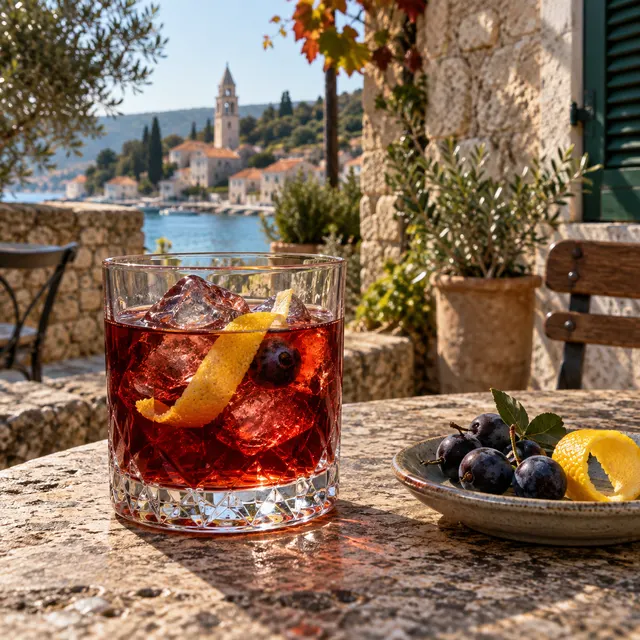
HUM 587 serves it as 587 Sloe on the Rocks: poured over ice in a short glass. A thin twist of lemonTwistA strip of peel twisted over the glass to release its oils, then dropped into the drink.Glossary adds a fresh edge to the dark fruit. For a longer drink, top it up with a little soda water, which lifts the fruit without adding sugar. A small measure topped with dry sparkling wine also makes a simple autumn aperitif.

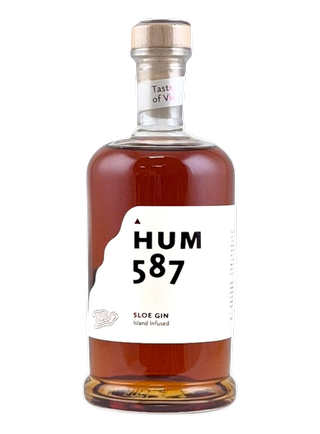 The ginHUM 587 Sloe Gin
 🍋
The garnishLemon twist
Your Comment
Other comments
Be the first to share your tasting
Neat, with tonic or in a cocktail: tell us what you thought.