
Search, discover, save and share your favorite gins
+1000 gins • PerfectServes • Tonics • Inspirations
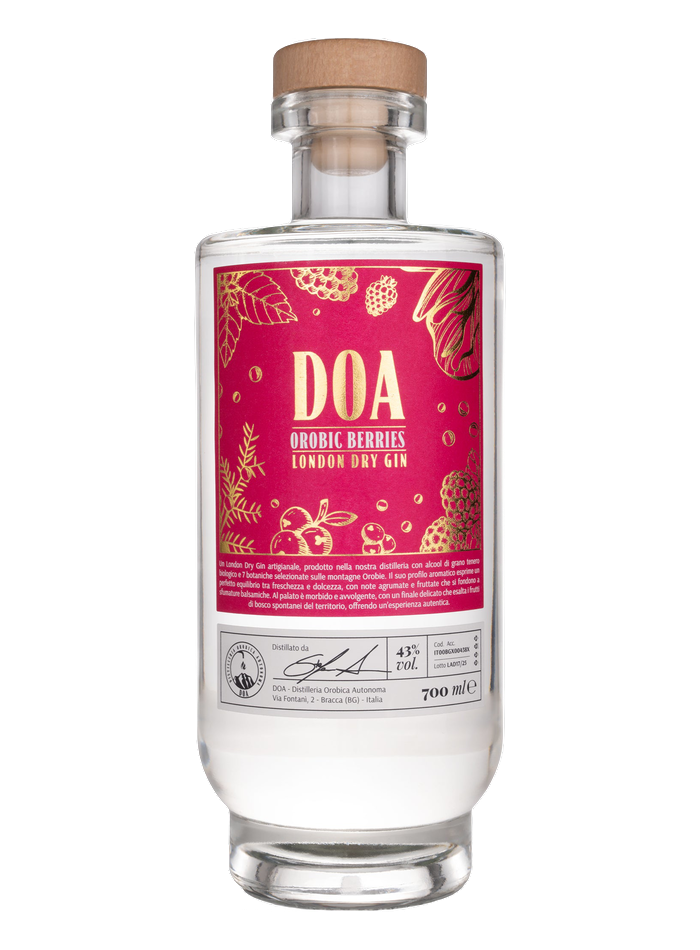
DOA Orobic Berries London Dry Gin
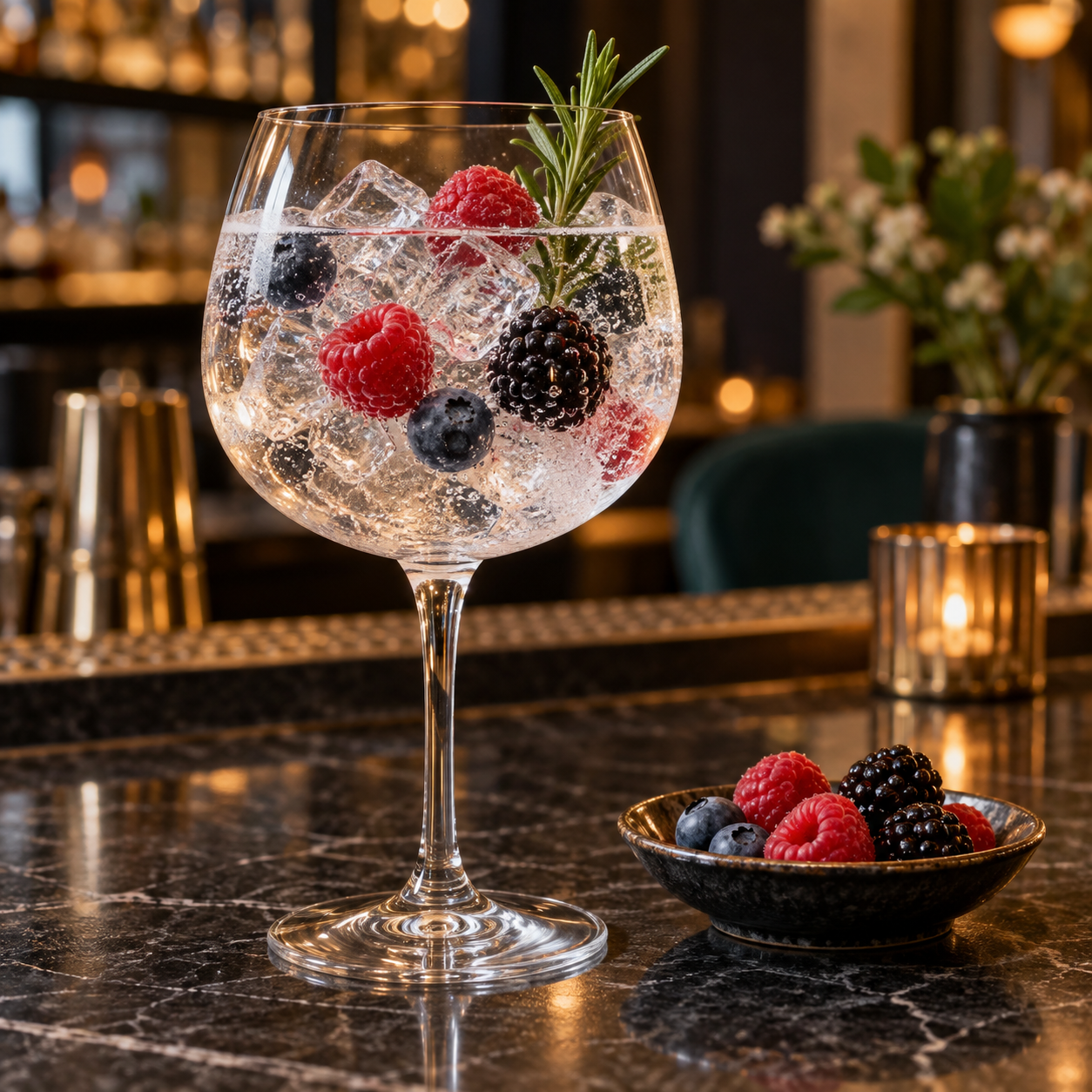
Best enjoyed with Fever-Tree Refreshingly Light Tonic Water, garnished with  Raspberry,
 Blueberry and
 Blackberry.

DOA Orobic Berries London Dry Gin
London Dry Gin · 43 % ABV · IT
Four days of steeping come before the still. DOA leaves raspberries, blueberries and blackberries in organic alcohol for that long, then distils the result in a copper pot, which is how a London DryLondon DryA style, not a place of origin: every flavour comes from distilling natural botanicals. After distillation only water and a trace of sugar may be added, with no flavouring or colouring.GlossarySee London Dry gins can carry real fruit: nothing may be added once the spirit comes off the still, so everything has to be in the charge beforehand. No sweetening is allowed either, which means any roundness you taste is fruit and alcohol, never sugar.
Dry · Fruity
The three berries are not interchangeable. Raspberry is the sharpest, acid first and sweet second, and the most perfumed of the three. Blackberry sits deeper and darker, closer to a cooked fruit in character although it stays dry here. Blueberry falls between them, softly floral with very little acid of its own. JuniperJuniperThe one compulsory botanical: gin must taste predominantly of juniper. Its "berry" is really a small conifer cone, resinous and peppery.Glossary runs beneath all three, joined by seven further botanicals picked by hand in the Orobie Alps, the range that rises directly above the valley and gives the bottle its name.
The base is organic wheat alcohol, certified from the grain up, and the batches are genuinely small. Stefano Arsuffi founded the distillery at Bracca, in the valleys above Bergamo, and works a 244-litre still, which is closer to a workshop than to a plant. Bottled at 43% in 700 ml, there is enough alcohol to stop the fruit reading as syrup and enough juniper to keep the whole thing recognisable as a dry ginDry ginGin with no perceptible sweetness: in the European Union, the word "dry" allows at most 0.1 g of sugar per litre.GlossarySee Dry gin gins rather than a fruit infusionInfusionFruit or plants are steeped in the spirit to release their flavour. Done after distillation, infusion often adds colour too, and the gin can no longer be called London Dry.Glossary.
A light tonicLight tonicA low- or no-sugar tonic, often sweetened with substitutes. Drier, it brings out the bitterness and the gin.Glossary suits it better than an Indian one, with less quinineQuinineAn alkaloid from cinchona bark that gives tonic its bitterness. The British in India drank it against malaria and added gin: the gin and tonic was born.Glossary to argue with the fruit. Pour 4 cl of gin, lengthen it with 10 cl of that tonic over hard ice, and drop in a raspberry, a blueberry and a blackberry. Everything should be cold before it meets, and one turn of the spoon is enough. The three fruits answer the three in the recipe, which is what makes the garnish useful rather than decorative.
DOA Orobic Berries London Dry Gin Perfect Serve
PerfectServe
Recommended Tonic
Garnish
Raspberry
Blueberry
BlackberryInstructions
Fill the glass with hard ice, add 4 cl of gin and 10 cl of chilled light tonic waterLight tonicA low- or no-sugar tonic, often sweetened with substitutes. Drier, it brings out the bitterness and the gin.Glossary.
Put Raspberry and Blueberry and Blackberry inside the glass and repeat the same garnish on a small dish beside it.
Flavors
Ingredients
- Blueberries
- Raspberries
- Juniper
- Blackberries