
Search, discover, save and share your favorite gins
+1000 gins • PerfectServes • Tonics • Inspirations
Cotswolds Wildflower Gin No 2
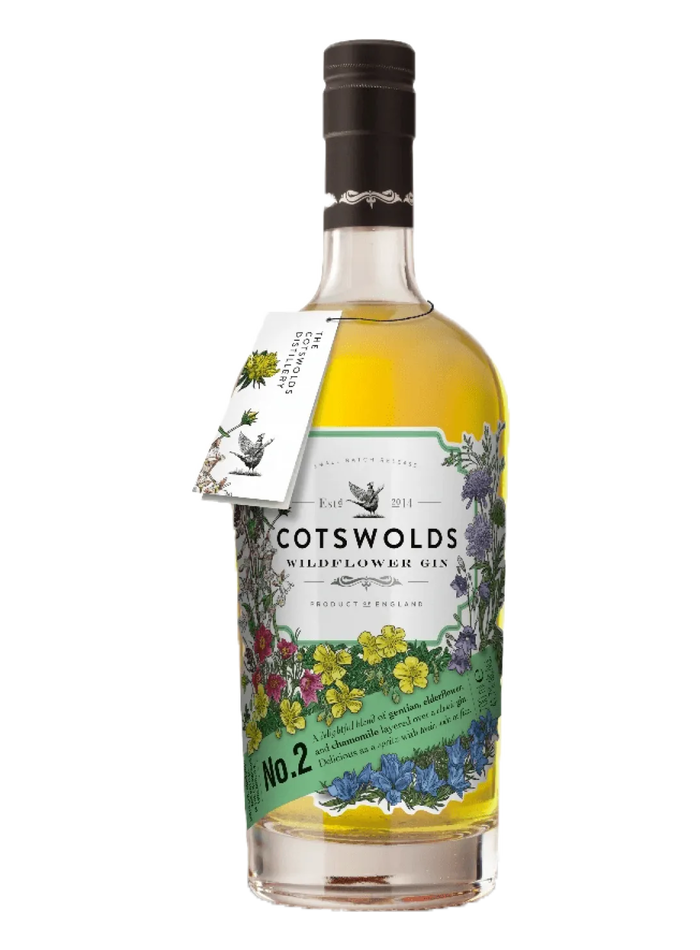
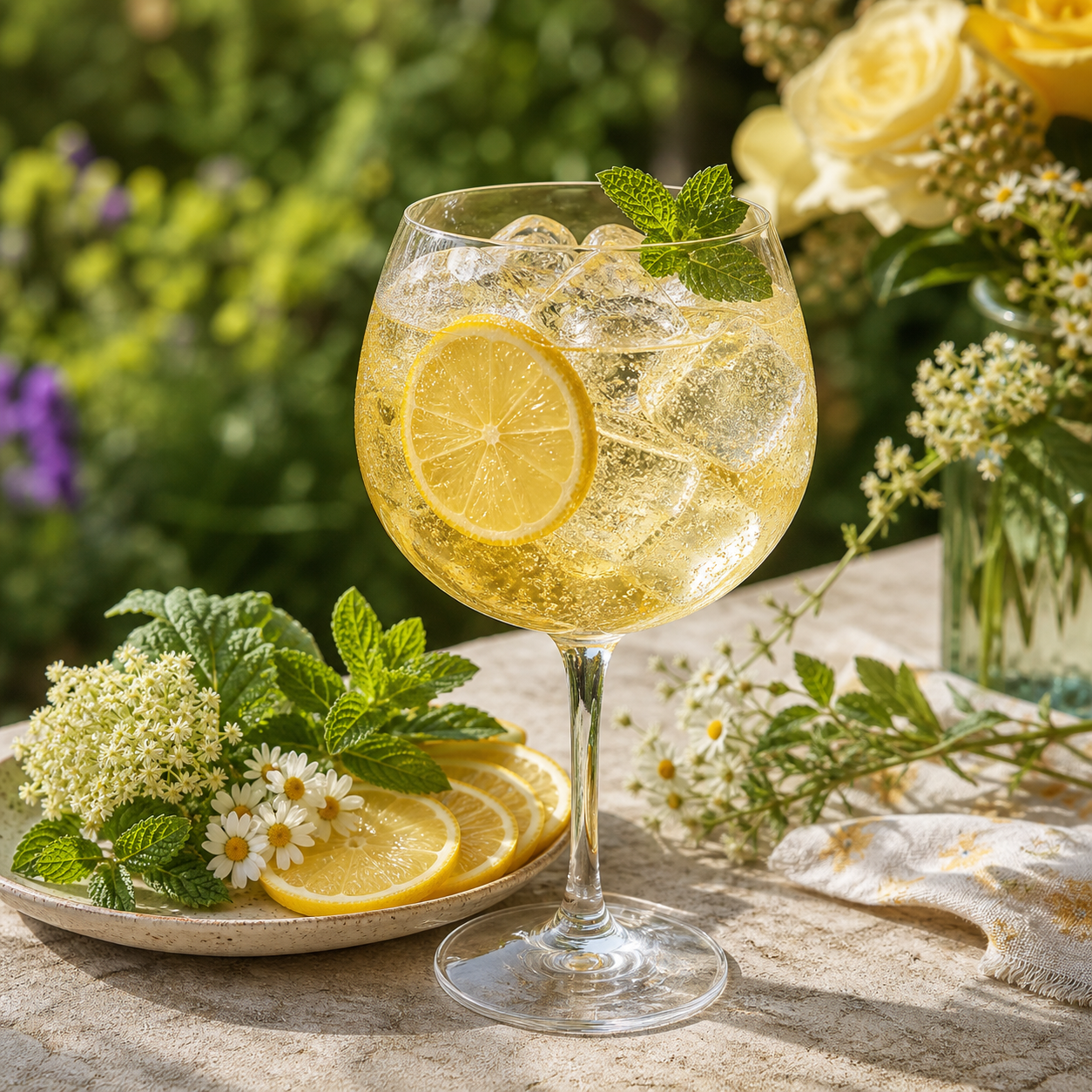
Best enjoyed with Fever-Tree Elderflower Tonic Water, garnished with  Dehydrated Lemon Wheel.
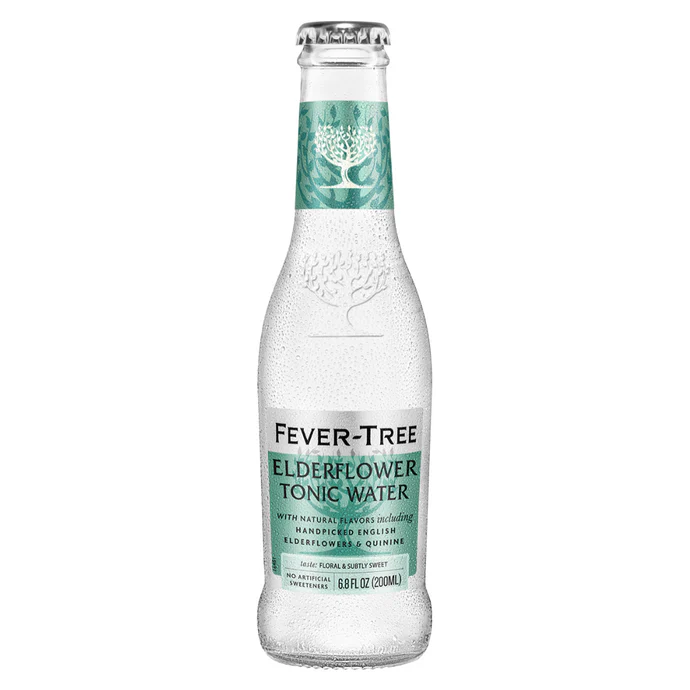 Recommended TonicFever-Tree Elderflower Tonic Water
Garnish
Dehydrated Lemon Wheel
Recommended TonicFever-Tree Elderflower Tonic Water
Garnish
Dehydrated Lemon WheelCotswolds Wildflower Gin No 2
Flavored Gin · 41.7 % ABV · GB-ENG
Cotswolds Wildflower Gin No 2 is a golden Cotswolds Distillery wildflower gin inspired by Cotswolds grasslands, combining a classic London DryLondon DryA style, not a place of origin: every flavour comes from distilling natural botanicals. After distillation only water and a trace of sugar may be added, with no flavouring or colouring.GlossarySee London Dry gins base with gentian, lemon balm, elderflower and chamomile. The gin is bottled with enough strength for a clean long drink, but its identity is defined less by power than by the precision of its botanical direction. The key aromatic frame brings together juniper, coriander, angelica root, gentian, lemon balm, elderflower and chamomile. This matters because the bottle is not trying to behave like a neutral London Dry. It keeps the category readable through juniper and dry structure, then lets its chosen plants define the personality of the drink.
Floral · Fruity · Herbal · Earthy
On the nose, lemon sherbet, elderflower, chamomile and a lightly bitter herbal depth from gentianGentianA mountain root of great bitterness, the base of many aperitifs; it adds length.Glossary. The first impression should be read as a progression rather than a list of equal ingredients: the most expressive botanicals arrive first, while juniperJuniperThe one compulsory botanical: gin must taste predominantly of juniper. Its "berry" is really a small conifer cone, resinous and peppery.Glossary, roots and spice provide the dry line underneath.
On the palate, the gin is golden, floral and bittersweet, with lemon balm lifting the middle and juniper holding the dry frame. Texture is important here. A good description of this gin needs to mention the attack, the middle and the finish, because the real interest appears when sweetness, bitterness, citrus, herbs, spice or fruit start to separate after dilutionDilutionThe water added by melting ice. In the right amount it opens the aromas and softens the alcohol; too much flattens the drink.Glossary.
In a gin and tonic, the safest serve is tonic or spritz serve, lemon wheel and fresh mint. The glass should stay simple: plenty of clear iceClear iceIce without air bubbles, made by slow, directional freezing. Denser, it melts more slowly and dilutes less.Glossary, a measured tonic and a garnish that echoes the gin instead of covering it. This gin can also work in lighter highballsHighballA long drink served in a tall, straight glass with plenty of ice: a spirit topped with soda or tonic. The word also names the glass.Glossary or aperitif-style cocktails when the mixer respects its main aromatic line. The finish is fresh, bittersweet and floral with a dry herbal return. It is a bottle to present through its own botanical logic, not as an interchangeable gin, and that is what makes the perfect servePerfect serveThe way the producer recommends serving the gin (glass, tonic, ratio, garnish) to show it at its best.Glossary easier to understand.
Cotswolds Wildflower No. 2 Elderflower Lemon Tonic
PerfectServe
Recommended Tonic
Garnish
Dehydrated Lemon WheelInstructions
Fill a chilled copa glassCopa glassA large stemmed balloon glass, popularised by the Spanish gin and tonic: it stays cold for longer and gathers the aromas above the drink.Glossary with plenty of clear iceClear iceIce without air bubbles, made by slow, directional freezing. Denser, it melts more slowly and dilutes less.Glossary.
Pour 5 cl of Cotswolds Wildflower Gin No.
2, then add 15 cl of Fever-Tree Elderflower Tonic Water slowly down the side of the glass.
Stir once.
Garnish with a dehydrated lemon wheel.
Flavors

Ingredients
- Coriander
- Angelica root
- Chamomile
- Juniper
- Lemon balm
- Elderflower
- Gentian